
Booster Box Investing Opportunities: One Piece, MTG, Pokémon and Palworld
The best-looking booster box is not automatically the best investment. Sealed trading-card products can appreciate, but they can also lose value, sit unsold or cost more to store and ship than expected. The opportunity is to identify lasting demand at a sensible entry price—not to assume every popular franchise guarantees a return.
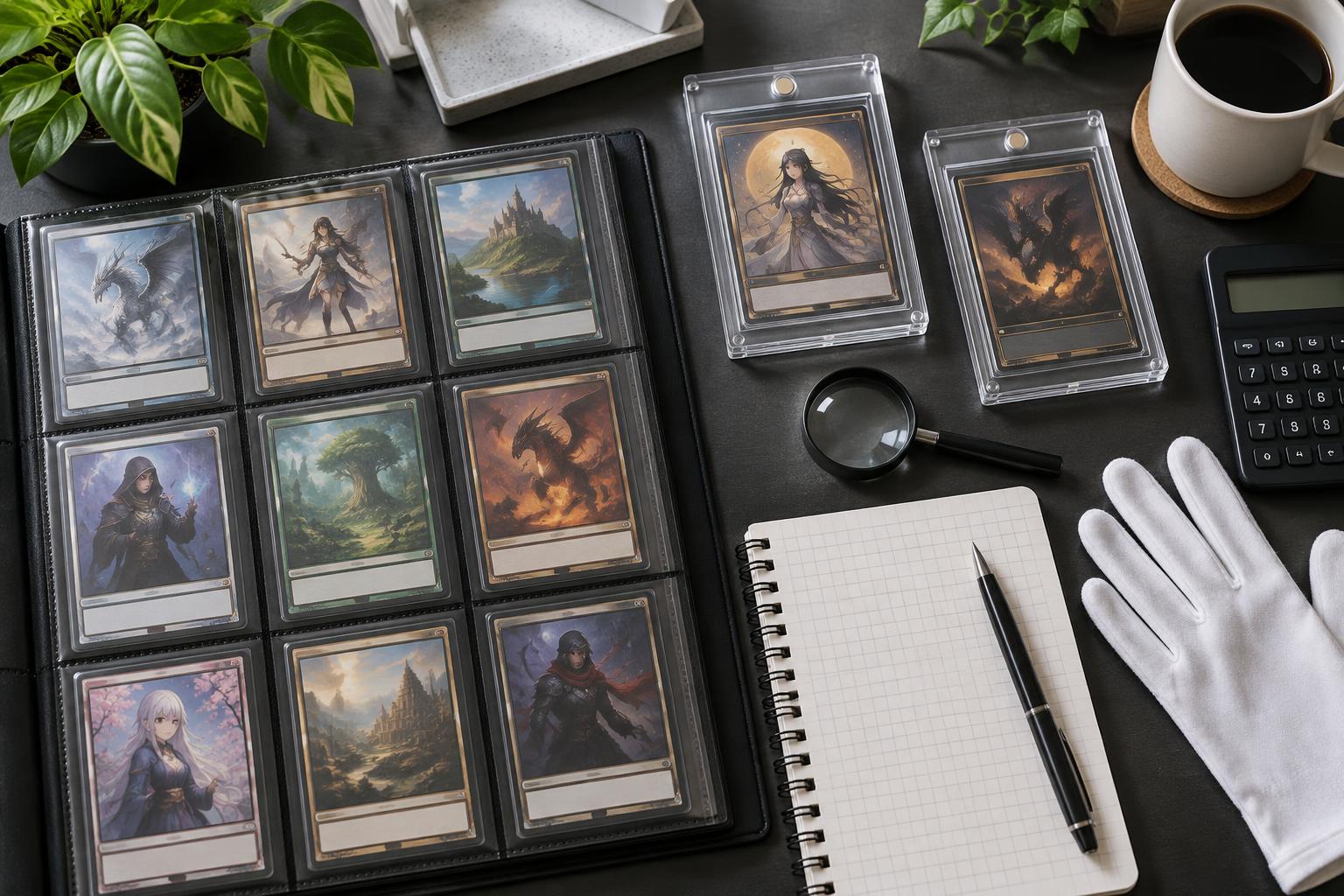
This guide compares One Piece, Magic: The Gathering, Pokémon and Palworld as research candidates, not buy recommendations. Market context: October 5, 2026. No price targets, profit forecasts or guaranteed returns are claimed. The cover is an editorial illustration of collecting and preservation, not official card artwork.
A four-game watchlist
| Game | Opportunity worth researching | Evidence to examine | Main risk |
|---|---|---|---|
| One Piece | Recognizable early sets and character-driven releases | Completed sales for the same language, edition and seal condition | Reprints, launch premiums and edition confusion |
| Magic | Established sets and separately priced premium formats | Player demand, collector demand and supply announcements | Temporary shortages mistaken for permanent scarcity |
| Pokémon | Recognizable expansions and anniversary sealed formats | Exact SKU, pack count, distribution and completed sales | Paying too much for widely distributed products |
| Palworld | Early releases in a newer card game | Repeat player participation, actual sales and edition details | Limited history, thin resale demand and additional supply |
These are different demand stories. Buying a box from every game does not eliminate risk if the entire collectibles market weakens.
One Piece: recognizable sets, disciplined entry prices
One Piece offers a straightforward research angle: a major character-driven franchise with distinct set identities. Early products such as Romance Dawn may appeal to collectors building a release-history collection, while recent sets such as The World’s Strongest Warriors attract attention around new cards and themes.
The opportunity depends on the price paid. A familiar set purchased at an extreme premium can be a worse proposition than a less fashionable product bought at a realistic price. Examine completed sales, not just optimistic asking prices. Separate English and Japanese boxes, different print waves and damaged-seal listings.
Start with the One Piece sealed catalog, then check marketplace transaction evidence independently. Do not assume a chase card guarantees a profitable box opening. Once a box is opened, its value depends on the actual cards inside, and the sealed-product investment is gone.
MTG: distinguish enduring demand from a shipping bottleneck
Magic has multiple buyer groups: players, collectors and fans of particular worlds or treatments. That creates several research paths, but it also makes product-level comparisons essential. Play Booster displays and Collector Booster displays serve different budgets and opening experiences.
Reality Fracture is a useful current example. Wizards says a shipment delay may temporarily tighten North American Play Booster supply after the October 2 release, with replenishment expected within a few weeks. Other products are reported to be moving on schedule. A price premium caused by delayed stock can unwind when the shipment arrives.
For Reality Fracture Play Booster Displays, a patient buyer should consider replenishment before extrapolating launch scarcity. Across the Magic catalog, research whether demand comes from regular play, lasting set appeal or a short-lived chase. Premium packaging and rare treatments alone do not establish a durable resale market.
Pokémon: anniversary appeal without format confusion
Pokémon’s recognizable characters and long collecting history give buyers many products to research. Standard expansion booster displays and anniversary ETBs should be evaluated separately, however. A special-set collection box is not the same investment as a conventional booster display.
The Pokémon Company confirms that 30th Celebration launched September 16 with several sealed formats. Its standard ETB contains nine packs, a Nidorina promo and accessories. The publisher also says more products will arrive later in 2026. That supports anniversary relevance, but not a claim that supply is permanently limited.
Compare the exact sealed format in the Pokémon catalog. Check retail restocks, package condition and completed sales. If you are paying a premium for a particular edition or exclusive contents, verify those contents rather than relying on the word “anniversary.” A strong franchise does not make an inflated purchase price safe.
Palworld: early-stage potential, early-stage uncertainty
Palworld is the most speculative candidate in this group because its card-game resale history is shorter. Early releases can interest collectors, but long-term value depends on sustained participation and willingness to buy sealed stock later—not simply recognition of the video game.
Bushiroad schedules Legends Awaken for October 30. Its separate Dawn of Palpagos reprint announcement describes additional first-edition shipments followed by a second edition in late October, with cards marked II. Edition differences may matter to collectors, but the marking does not guarantee that first editions will appreciate.
Research the Palworld market with a smaller risk budget than you would use for a product whose resale demand you already understand. A listing price is not proof of liquidity: look for repeated completed sales and realistic selling times. Do not pay an early-adopter premium you cannot afford to lose.
Work backward from your net resale proceeds
A simple break-even exercise is more useful than a dramatic return forecast.
Net resale proceeds = sale price − selling fees − shipping − packaging − other selling costs.
For illustration only, suppose a box costs $120 delivered. If you later sell it for $150, pay a hypothetical 13% selling fee and spend $12 on shipping and packaging, net proceeds are $118.50. That is a $1.50 loss before storage, insurance or tax obligations, despite the higher sale price. Actual marketplace fees and tax treatment vary.
Record your purchase cost and date separately from current asking prices. The Vault can help account holders track quantities and catalog-based collection values, but a displayed valuation is not a guaranteed cash offer or a substitute for completed-sale research.
Storage and an exit plan matter
Keep sealed products away from moisture, direct sunlight and crushing pressure. Retain receipts and clear photographs of the packaging. Appropriate storage boxes and protective supplies can help preserve condition; they cannot eliminate financial risk.
Before buying, decide why another collector would want the exact product, how long you can hold it and which marketplace you would use to sell. Avoid borrowing to speculate on sealed cards. If your main enjoyment comes from opening packs, budget for the hobby rather than describing the purchase as a guaranteed investment.
FAQ
Which of these games offers the best booster box investment?
There is no universal winner. The specific product, entry price, supply, condition and resale demand matter more than the franchise name alone.
Are first editions guaranteed to outperform reprints?
No. A distinct edition can attract collectors, but the premium depends on actual demand. Additional supply can also change the broader market.
Does a current marketplace price show what I can sell for?
Not necessarily. Asking prices are offers, not completed transactions. Check recent comparable sales and subtract selling costs.
Is this financial advice?
No. This is educational collecting commentary. Sealed products are speculative, may be difficult to sell and can lose value.
For current release context, see our new booster boxes on the market guide.