
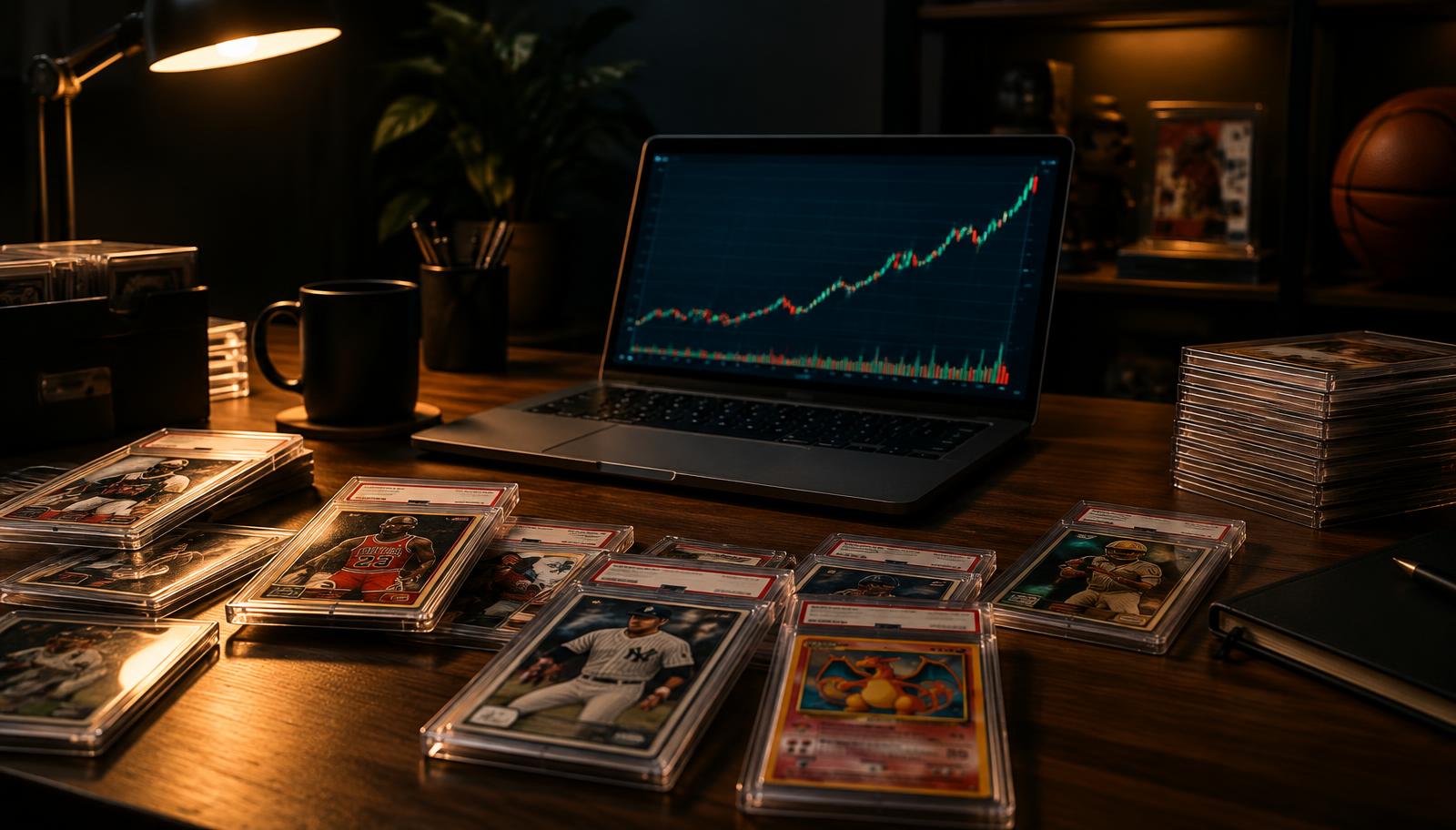
The State of the Sealed: TCG Booster Box Market Index & Trends 2026
Sealed product doesn't move like singles. A chase card can double over a weekend; a booster box grinds. That slow grind is exactly why a sealed booster box price index is more useful than any single headline sale, and why we built the boosterbox.gg catalog around tracked boxes across 15 games instead of hype lists.
Prices on this site update twice a day from marketplace listings. Every chart you see is built from those snapshots, so the history gets richer the longer a box is tracked.
Decoding the TCG Market Cap Index
- A TCG market cap index is the combined market value of a basket of sealed products, tracked over time, so you can read the direction of the whole sealed market rather than one box.
- It matters because individual boxes are noisy. A single eBay outlier can make a box look 20% hotter than it is. A basket smooths that out.
- It breaks down by game. Pokémon, Magic, One Piece and Yu-Gi-Oh! carry most of the sealed liquidity. Lorcana, Star Wars: Unlimited and the newer games trade thinner, and thin books move harder in both directions.
Secondary liquidity is the quiet variable. A box with dozens of active listings has real price discovery. A box with three listings has a price that's really just one seller's opinion. When you read any booster box price chart, check how deep the market is before trusting the line.
Global corrections tend to hit in-print product first. Collectors sell what's easy to replace, and dealers dump fresh allocation into a soft market. Out-of-print boxes usually hold better because nobody can make more of them.
Supply-Side Pressures: Booster Box Print Wave Tracking
- Booster box print wave tracking is watching when a set gets reprinted, how big the wave looks, and how quickly that new supply clears.
- The first wave sets the tone. Release-week prices often sit well above where the box settles once distributors catch up.
- Reprints cap the upside. As long as a set stays in print, the price has a lid. When printing stops, that lid comes off.
Print schedules differ a lot by publisher. Some games release a main set roughly every quarter and reprint aggressively. Others run tighter allocations and leave shortages unresolved. Comparing those schedules explains a lot about why one game's boxes drift down after launch while another's climb.
Supply absorption is the tell. When listings shrink while price holds, the market is eating the wave. When listings pile up and price slips, the wave is winning.
Navigating the Booster Box MSRP vs Market Price Chart Gap
- The MSRP vs market price gap is the difference between what a box was supposed to cost and what it actually trades for.
- A box trading under MSRP usually means oversupply or a weak set. That can be a buying window if the set has long-term pull.
- A box trading far over MSRP tells you demand outran printing. Those boxes need ongoing scarcity to hold that premium.
Every product page on boosterbox.gg lists TCGplayer, eBay and Amazon prices side by side, so you can see the spread between marketplaces without opening ten tabs. If you're shopping a specific box right now, browse lowest prices on TCGplayer and compare against the tracked history before you commit.

New boxes start with short histories, so their charts look flat at first. Give a box a few weeks of twice-daily snapshots and the trend becomes readable.
FAQ
What is a sealed booster box price index?
A sealed booster box price index tracks the market prices of many sealed booster boxes over time, so you can see whether the overall sealed TCG market is rising, flat or correcting instead of judging by one sale.
Why do in-print booster boxes drop after release?
In-print boxes drop because reprints and distributor allocation keep adding supply. Price usually settles once that supply is absorbed, and it tends to rise only after printing stops.
How often does boosterbox.gg update booster box prices?
boosterbox.gg refreshes marketplace prices twice a day and stores each snapshot, which builds the price history charts on every product page.